Imagine spending your Saturday afternoon finally setting up that gorgeous cedar dining set, only to watch it turn a dull, weathered grey before the next summer even arrives. It's a common frustration that many of our friends and neighbors face! You want your patio to be a place of beauty and relaxation, not a source of chores and regret. Knowing how to protect outdoor wood furniture shouldn't feel like a guessing game. Whether you're worried about using the wrong cleaning method or confused by the endless rows of oils and stains at the store, we're here to help!
We understand that your outdoor space is an investment in your family's comfort. As a team dedicated to reliability, we've put together this simple guide to take the stress out of wood maintenance. You'll learn the most effective ways to shield your wooden patio pieces from sun, rain, and wear so they stay beautiful for years to come! We'll walk you through a clear maintenance schedule, explain the differences between sealers and oils, and show you how simple additions like shade covers provide vital UV protection. Let's get your furniture looking brand new every single spring!
Key Takeaways
- Learn why moisture and UV rays are your furniture's biggest enemies and how a deep clean ensures your protective finish bonds perfectly.
- Discover exactly how to protect outdoor wood furniture by choosing the right stain or sealer based on your specific style and sun exposure!
- See how physical barriers like canopies and shade covers act as a giant umbrella to keep the elements away from your wood entirely.
- Master a simple seasonal maintenance schedule and use the "Water Bead Test" to know exactly when it's time for a fresh coat of protection!
Table of Contents
- Understanding the Elements: Why Your Wood Furniture Needs a Defense Strategy
- Preparing Your Wood: The Secret to a Long-Lasting Protective Finish
- Stains, Sealers, and Oils: Choosing the Right Shield for Your Style
- Beyond Chemicals: Using Physical Barriers to Double Your Protection
- The Maintenance Calendar: Keeping Your Wood Beautiful Year-Round
Understanding the Elements: Why Your Wood Furniture Needs a Defense Strategy
Even though your patio chairs aren't growing in the forest anymore, the wood is still very much alive. It breathes. It reacts to every change in the humidity and temperature. This organic nature is what makes wood so beautiful, but it also makes it vulnerable to the world around it. Learning how to protect outdoor wood furniture starts with understanding that your pieces are constantly under attack from nature's toughest forces.
We call these the "Big Three" enemies of wood:
- UV Rays: These act like invisible sandpaper, breaking down the wood's natural glue.
- Moisture: Rain, humidity, and dew cause the wood to swell and shrink.
- Temperature Fluctuations: Rapid changes in heat and cold lead to deep cracks and warping.
When you see your wood turning a dull, weathered grey, it isn't just a sign of age. It's actually a sign of surface fiber damage! This color change means the sun has bleached the natural pigments and weakened the wood's strength. Protecting your furniture now saves you hundreds of dollars in replacement costs later. It's an investment in your family's outdoor comfort!
The Silent Damage of UV Radiation
Sunlight is one of the most persistent threats to your outdoor decor. UV rays don't just fade your favorite stain; they bleach natural pigments and weaken the structural integrity of the timber. Even "durable" woods like teak or cedar need help to stay strong. Without proper wood finishing techniques, the sun's energy makes the surface brittle. This creates tiny micro-cracks that allow water to seep deep inside the grain. Using shade covers or canopies is a fantastic way to block these rays before they ever touch your furniture.
Moisture: The Root of Rot and Warping
Rain and humidity cause wood to expand and contract constantly. This "breathing" cycle is what leads to warping and splitting over time. Standing water on flat surfaces like table tops is especially dangerous. It soaks deep into the grain and invites mold or rot to take hold. Don't forget about morning dew! It's just as damaging as a heavy rainstorm because it sits on the surface for hours every single day. Knowing how to protect outdoor wood furniture means keeping it dry whenever possible to prevent these issues from starting.
Preparing Your Wood: The Secret to a Long-Lasting Protective Finish
The best sealer in the world won't work if the wood isn't ready to receive it. If you want to know how to protect outdoor wood furniture effectively, you have to start with a clean slate. Any protective coating needs to bond directly with the wood fibers. If there's dirt, mold, or old oil in the way, your new finish will just peel off. It's a waste of your hard-earned time and money! We want your patio pieces to look beautiful for a lifetime, and that starts with proper preparation.
Start by removing everything that shouldn't be there. This includes dirt, mildew, and that grey oxidation we discussed earlier. Once the wood is scrubbed, you must be patient. We recommend the 48-hour rule. This means letting your furniture dry completely in the sun for two full days before applying any product. If you trap moisture inside the wood, you're inviting rot to grow from the inside out. It's a simple step that makes a huge difference!
Sanding is the secret step that many people skip, but it's vital. It opens up the pores of the wood so it can truly drink in the protective finish. Safety is a priority during this stage. Always wear a simple respirator mask while you work. Breathing in fine wood dust is never a good idea, and we want you to stay healthy while you improve your home!
Cleaning Without Damaging the Grain
You might be tempted to use a high-pressure washer to speed things up. Please don't! These machines are often much too powerful. They can easily splinter delicate wood fibers and ruin the smooth surface. A simple mix of mild soap and water with a soft-bristle brush is a much safer choice. For stubborn grey spots, a specialized wood brightener can work wonders. If you're ready to upgrade your space, browsing our high-quality outdoor furniture can give you a fresh start for the season.
Sanding Basics for Beginners
Sanding doesn't have to be a difficult chore. You just need the right grit for the job. Start with a medium 80-grit sandpaper to remove old finishes and smooth out rough patches. Follow that up with a finer 120-grit to make the surface feel like silk. Always move your hand in the same direction as the wood grain. This prevents cross-grain scratches that become very obvious once you apply a stain. Finally, use a tack cloth to wipe away every speck of dust. A pristine surface is the only way to get that professional look!
Stains, Sealers, and Oils: Choosing the Right Shield for Your Style
Now that your wood is clean and dry, it's time to choose your shield! This is often where people feel the most confused. With so many cans on the shelf, picking the right one is essential for knowing how to protect outdoor wood furniture the right way. You generally have two choices: finishes that soak into the wood or finishes that sit on top like a shell.
Penetrating finishes, like oils and many stains, dive deep into the fibers. They don't peel because they become part of the wood itself. Film-forming barriers, like varnishes or polyurethanes, create a hard layer on the surface. While these look great at first, they can crack and peel when the wood expands in the heat. For most patio pieces, we recommend penetrating finishes because they are much easier to maintain over time!
The amount of color you choose also matters. Think of pigment as sunscreen for your furniture. A clear sealer looks natural, but it offers the least UV protection. A darker stain has more pigment, which blocks more of the sun's rays. If you have a beautiful wood like teak, a simple oil is often best to maintain its natural glow. For softer woods like pine, a semi-transparent stain provides the extra durability you need to prevent rot.
Water-Based vs. Oil-Based Finishes
Oil-based products are the traditional choice for a reason. They penetrate deeply and provide a rich, classic look. However, they take a long time to dry and can have a strong smell. Water-based finishes have improved significantly in recent years. They dry quickly, clean up with soap and water, and are often more eco-friendly. In high-humidity environments, water-based options are often better because they contain more effective ingredients to resist mold and mildew growth!
The Pros and Cons of Clear Sealers and Stains
Clear sealers are perfect if you love the raw, natural look of your timber. The downside is that you'll likely need to re-apply them every single year. Choosing between these options is a big part of learning how to protect outdoor wood furniture for the long haul. Semi-transparent stains are our favorite middle ground. They add a splash of color and better UV protection while still letting the wood grain shine through. If your furniture is older or has stains you want to hide, a solid stain offers maximum protection. Just remember that it will look more like paint and hide the natural grain entirely.
Beyond Chemicals: Using Physical Barriers to Double Your Protection
While stains and oils provide a vital chemical shield, they're only half the battle. The most effective strategy for how to protect outdoor wood furniture is to prevent the elements from touching the wood in the first place! Think of physical barriers as your furniture's personal bodyguard. By blocking rain and harsh sunlight directly, you can double the time between maintenance cycles. It's a simple way to ensure your investment stays gorgeous for years.
One of the easiest ways to prevent rot is focusing on elevation. Never leave your furniture legs sitting directly on wet grass or soil for long periods. Wood acts like a straw; it will suck moisture up from the ground even if the rest of the piece is dry. Use stone pavers or deck spacers to keep the feet off the damp earth. When winter arrives, moving your pieces into a garage or shed is the ultimate life-extender. This total break from the weather prevents the wood from enduring the brutal freeze-thaw cycles that cause deep cracks.
The Power of High-Quality Furniture Covers
When you aren't using your patio, high-quality covers are your best friend. However, you must choose the right material. Always look for breathable fabrics that allow air to circulate. If a cover is completely airtight, it can trap humidity underneath and actually encourage mold and mildew growth. This is why "water-resistant" fabrics are often better for wood than "waterproof" plastic ones. Use these covers during the off-season or whenever you're away on vacation to keep your wood pristine and ready for your return!
Using Canopies and Shade Covers for UV Defense
Strategically placing your furniture under a patio canopy or gazebo provides a massive boost in UV defense. These structures act like a giant umbrella, keeping the sun's rays from bleaching your wood's natural pigments. Modern triangle sail shades are another flexible option that provides excellent coverage without taking up floor space. By keeping the wood in the shade, you also reduce the surface temperature of the material. This prevents the wood from getting too hot and brittle, which is a major cause of structural cracking. If you're looking for the most reliable shade covers to shield your investment, we have options that combine beautiful style with heavy-duty protection.
The Maintenance Calendar: Keeping Your Wood Beautiful Year-Round
A beautiful backyard is the heart of a home during the summer months. To keep that space inviting, you need a simple plan that fits into your life. Maintenance doesn't have to be a heavy burden! By turning these tasks into a seasonal family tradition, you ensure your patio remains a place of joy rather than a list of chores. Knowing how to protect outdoor wood furniture is all about consistency and small, proactive steps.
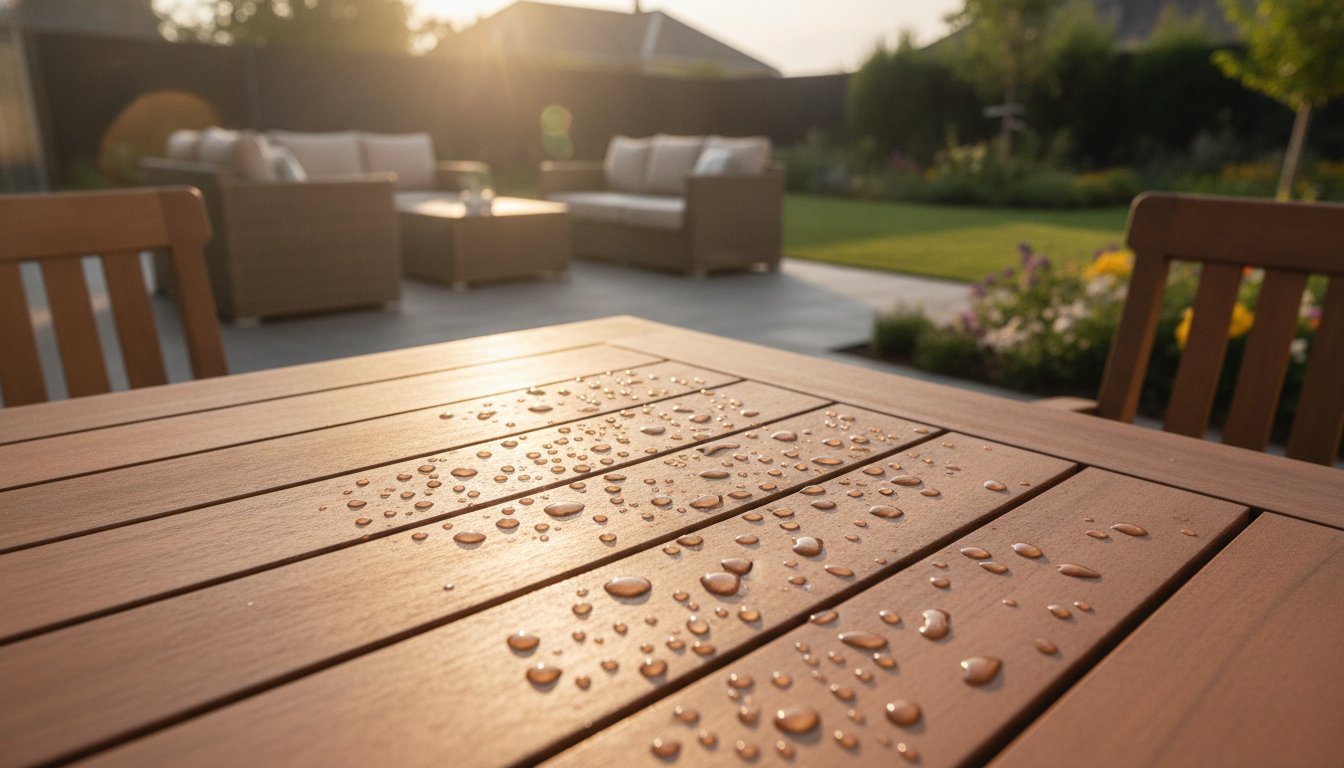
One of the best tools in your arsenal is the Water Bead Test. It's a quick way to see if your protective shield is still working. Simply pour a few drops of water onto a flat surface of your furniture. If the water beads up into tight droplets, your sealer is doing its job! If the water soaks into the wood and leaves a dark spot, it's time for a fresh coat. We recommend performing this test at the start of every season to stay ahead of any damage.
Don't forget about high-traffic areas like armrests and table edges. These spots often wear down faster than the rest of the piece. A quick mid-season touch-up with a little bit of oil or sealer can prevent these areas from turning grey. It only takes a few minutes, but it keeps the entire set looking brand new!
Spring Prep and Winter Storage Tips
When spring arrives, start with a thorough inspection. Look for any cracks or loose joints that might have developed during the cold months. Give everything a fresh clean with mild soap to remove any dust or pollen. Before the first frost of winter, follow a "Clean and Cover" routine. Wipe down your furniture and ensure it is completely dry before putting on your covers. A vital tip: never store wood furniture in a heated room! The lack of humidity in a heated house can cause the wood to dry out too quickly, leading to severe warping and splitting. A cool, dry garage or shed is much better.
Spot-Cleaning and Minor Repairs
Life happens outdoors, and that means dealing with bird droppings or tree sap. These substances are often acidic and can eat through your finish if left for too long. Wipe them away immediately with a damp cloth! If you find minor scratches, you don't always need to refinish the whole piece. Often, a light sanding and a small dab of matching stain will fix the problem. Finally, take a moment to check and tighten all the hardware. Structural wobbles are often just loose screws, and keeping them tight ensures your furniture is safe for the whole family to enjoy. This proactive approach is the ultimate secret to how to protect outdoor wood furniture year after year!
Enjoy a Lifetime of Outdoor Comfort and Beauty
Protecting your investment is one of the smartest things you can do for your family's home. You now have a complete roadmap for success! Remember that proper preparation is the foundation of every long-lasting finish. By choosing the right stains and using the Water Bead Test regularly, you'll always know exactly how to protect outdoor wood furniture throughout the changing seasons. These small steps ensure your favorite pieces stay strong and inviting for years to come.
We take great pride in being a Veteran-owned and operated business dedicated to high-quality outdoor living. You can always count on us for personal customer service you can trust! If you're ready to double your defense against the sun and rain, we invite you to find the perfect canopy or shade cover for your patio here! Adding these physical barriers is the ultimate way to keep your wood looking brand new. We're so excited to help you make your outdoor space shine!
Frequently Asked Questions
How often should I apply sealer to my outdoor wood furniture?
Most sealers need a fresh application every one to three years. The exact timing depends on how much sun and rain your patio receives every day. Knowing how to protect outdoor wood furniture starts with this regular schedule! You can easily check the status by pouring a few drops of water on the surface. If the water soaks in instead of beading up, it's time for a new coat.
Can I use a pressure washer to clean my wooden patio chairs?
We strongly recommend avoiding pressure washers for your wooden pieces. These machines are often way too powerful and can easily splinter the delicate wood fibers. This damage makes the surface rough and allows moisture to seep in more quickly than it should. A soft-bristle brush with mild soap and water is a much safer choice! It takes a little more effort, but it preserves the life of your furniture.
Is it better to paint or stain outdoor wood furniture for protection?
Staining is generally the better choice for the long-term health of your wood. While paint offers a thick barrier, it can trap moisture inside the wood and eventually peel or crack. Stains, especially penetrating ones, soak into the fibers and allow the wood to breathe. This makes the maintenance process much easier because you won't have to scrape off old paint when it's time for a fresh coat!
What is the best wood for outdoor furniture if I want low maintenance?
Teak is widely considered the gold standard for low-maintenance outdoor wood. It has a high natural oil content that resists rot and insects even without extra treatments. Cedar and Redwood are also excellent choices because they naturally resist decay over time. While these woods are more durable, using shade covers can still help them last much longer by blocking the harsh UV rays that turn them grey.
How long does wood need to dry after rain before I can stain it?
You should wait at least 48 hours after a rainstorm before applying any stain or sealer. Wood is very porous and holds onto moisture deep inside its grain. If you apply a finish while the wood is still damp, you'll trap that water inside. This often leads to the finish peeling off or mold growing underneath. Always wait for a window of dry, sunny weather to ensure the best results!
Do I really need to cover my furniture if it has a protective finish?
Yes, using covers is a fantastic way to double the lifespan of your protective finish! Even the best sealers eventually break down under constant sun and heavy rain. Covers act as a primary shield, allowing the chemical finish to stay intact for much longer. It's an easy habit that saves you money on supplies and reduces the time you spend on yearly maintenance tasks every single spring.
Can I protect wood furniture that has already started to turn grey?
You absolutely can restore and protect furniture that has turned grey! That grey color is just surface-level oxidation caused by the sun. You'll need to use a wood brightener or do some light sanding to reveal the fresh, tan wood underneath. Once the surface is clean and smooth, you can apply a high-quality sealer to keep it looking brand new for the future. It's never too late to start!
Does teak oil actually protect wood or just make it look better?
Teak oil is primarily used to maintain the warm, golden glow of the timber. It does provide a small amount of surface protection, but it isn't a long-term sealer. Because it's an oil, it will eventually evaporate or wash away with the rain. If you want to know how to protect outdoor wood furniture for the long haul, consider a dedicated sealer after the oil has dried! This provides a much stronger defense.