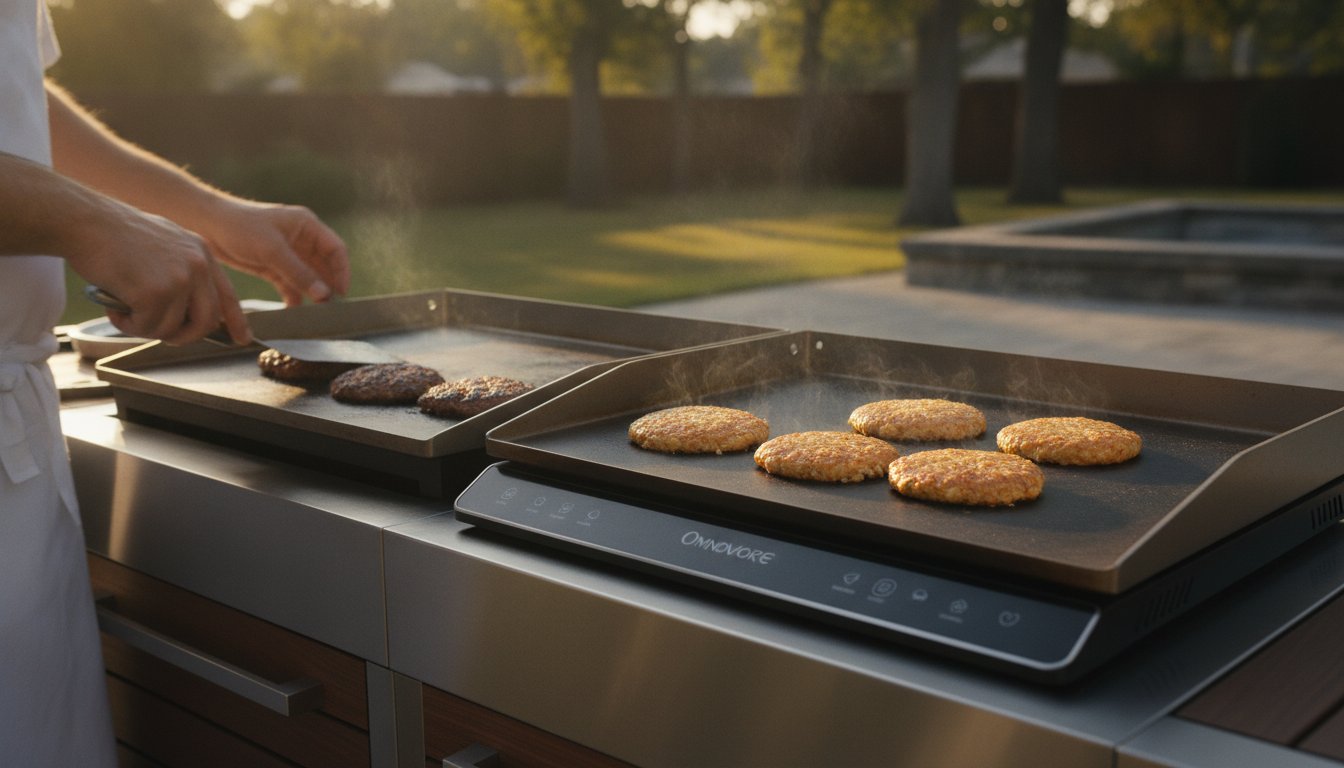
You might think the new Omnivore plate is a mysterious new metal, but the truth is actually much more practical. It is not a secret alloy! It is a structural evolution designed to fix the most common headaches of outdoor cooking. Choosing between Omnivore vs Steel Griddles often feels like a choice between marketing hype and traditional reliability.
We know how frustrating it is when your griddle plate warps under high heat or leaves you with cold spots that ruin a perfectly good breakfast. You deserve a reliable surface that uses less propane and cooks every smash burger evenly. It can be confusing to sort through branding when you just want a dependable tool for your backyard!
This guide explores the engineering differences so you can choose with total confidence. We will look at how these surfaces handle extreme temperatures, resist bending, and help you save on fuel costs. Discover how the right technology can turn your patio into the heart of your home!
Key Takeaways
- Learn how structural reinforcements prevent the griddle plate from warping under extreme temperatures!
- Discover why comparing Omnivore vs Steel Griddles shows that new designs reach high heat while using much less propane.
- See how integrated wind guards protect your burners and maintain steady temperatures during breezy outdoor cookouts.
- Understand the engineering secrets behind edge-to-edge heat consistency for perfectly cooked meals every time!
- Get a clear breakdown of which surface fits your budget and cooking style to help you build the perfect outdoor kitchen.
Table of Contents
- Understanding the Griddle Plate Revolution
- What Exactly is an Omnivore Griddle Plate?
- Performance Showdown: Heat Distribution and Fuel Efficiency
- Durability and Maintenance: Dealing with Warping and Rust
- Choosing Your Perfect Griddle Setup for 2026
Understanding the Griddle Plate Revolution
Backyard cooking has changed so much lately! While many of us grew up with the smoky scent of charcoal grills, the griddle craze has truly taken over modern backyards. It is easy to see why. Griddles let you cook everything from fluffy pancakes to crispy smash burgers in one spot. They turn your patio into a full-service diner! When you are building a beautiful outdoor kitchen, the cooking surface is the most important choice you will make. It is the heart of the whole setup and dictates how your food turns out.
Today, we are looking at two main contenders. You have traditional cold-rolled steel and the new Omnivore plate. While they look similar at first glance, the engineering behind them is quite different. The debate of Omnivore vs Steel Griddles is really about how you want to manage heat and durability. Both surfaces share a common goal. They both want to hold heat well and develop a beautiful, non-stick seasoned finish over time. Understanding the Griddle and its history helps us appreciate how far this technology has come!
What is a Traditional Steel Griddle?
Traditional griddles use cold-rolled steel. This material has been the industry standard for decades because it is incredibly tough and reliable. It is essentially a thick, flat slab of heavy metal that handles high heat beautifully. The magic of steel is in the seasoning process. As you cook with oil and heat, the surface creates a natural non-stick layer. This layer protects the metal and makes cleanup a breeze. It is a process that gets better every time you use it! Many cooks love the simple, rugged feel of a classic steel plate that they can pass down through generations.
The Rise of the Omnivore Technology
It is a common mistake to think "Omnivore" is a brand new type of metal alloy. It is actually a patented structural design! This technology was created to solve very specific problems that have frustrated outdoor cooks for years. 2026 is the year of smarter engineering in the backyard. The Omnivore design focuses on preventing the plate from bending and making sure your propane lasts longer. When weighing Omnivore vs Steel Griddles, it is about taking the steel we already love and making it work harder for you. We want your cooking experience to be as stress-free as possible! This design ensures you spend more time enjoying your family and less time worrying about your equipment.
What Exactly is an Omnivore Griddle Plate?
The Omnivore plate is a high-efficiency cooking surface that changes the way we think about metal. While many people think they need the thickest piece of steel possible, engineering tells a different story. It is all about structural geometry! The Omnivore plate uses a specific shape to stay flat and strong under pressure. This is a big deal when comparing Omnivore vs Steel Griddles because traditional flat plates can suffer from the "taco effect." This happens when the metal bows or warps under intense heat. Nobody wants their cooking oil pooling in the corners!
The secret lies in the structural ribbing on the underside of the plate. These reinforcement bars manage how the metal expands when it gets hot. Instead of bending, the plate stays true and level. It is a reliable partner for your backyard cookouts! Because the plate is designed to be efficient, it actually reaches cooking temperatures faster than older designs. It also recovers quickly after you drop a pile of cold meat on the surface. This means your food sears perfectly instead of steaming in its own juices.
Key Design Features of the Omnivore
One of the smartest parts of this design is the integrated Wind Guard. The edges of the plate are actually folded down to create a built-in deflector. This protects your burners from the elements! It keeps the heat exactly where it belongs, right under your food. This helps you save on propane and prevents those frustrating flame-outs on breezy days. To keep your new setup in top shape, you can find the right grilling and cooking accessories to help with daily maintenance and cleaning.
- Folded edges act as built-in wind deflectors to stabilize the flame.
- Under-plate reinforcement bars manage thermal expansion to prevent warping.
- Optimized geometry allows for faster heat recovery between batches of food.
Material Comparison: Is it Still Steel?
Yes, it is! Both of these surfaces are made from high-carbon steel. This is great news because it means the seasoning process is exactly the same for both types. You still get to enjoy that natural, non-stick finish that only gets better with age. You don't need special cleaners or new techniques to keep it looking beautiful. It is the same rugged material you trust, just built with a more modern approach to physics.
The Omnivore plate is a structural redesign of cold-rolled steel for optimized heat management.
If you are comparing Omnivore vs Steel Griddles, remember that the material stays the same while the performance evolves. It is about choosing a tool that works with the physics of heat rather than just fighting against it. We want you to feel confident that your griddle will stay flat and hot for years to come!
Performance Showdown: Heat Distribution and Fuel Efficiency
How much propane do you go through during a busy grilling season? It's a question every backyard chef asks eventually. When comparing Omnivore vs Steel Griddles, the answer often comes down to how well the plate holds onto the energy you're paying for. Traditional steel plates are tough, but they can be a bit wasteful with heat. The Omnivore design changes that by focusing on efficiency from the ground up! You want every bit of heat to go into your food, not into the air around your patio.
Recovery time is another huge factor for a busy cook. When you drop a dozen cold burger patties onto a hot surface, the temperature naturally dips. A traditional steel plate might take a few minutes to climb back up to that perfect searing temp. Because the Omnivore plate is engineered to trap heat, it bounces back much faster. This means you get a consistent crust on every single burger, even when you're cooking for a crowd!
BTUs and Heat Efficiency
Many people look at BTU ratings and assume that higher numbers always mean better cooking. That isn't always the case! Traditional steel griddles often require very high BTUs because so much heat escapes out the sides. The Omnivore plate uses its built-in wind guards to trap that energy right where the burners are. This allows the surface to reach high temperatures while using significantly less fuel. Over a long summer of weekend cookouts, those fuel savings really start to add up. You'll find yourself making fewer trips to the store for propane refills!
Cooking Surface Temperature Consistency
Have you ever noticed that your pancakes cook perfectly in the middle but stay raw on the edges? That is a classic sign of uneven heat distribution on a standard steel plate. Traditional plates often have significant "hot spots" directly over the burners and "cold zones" near the perimeter. The structural design of the Omnivore plate helps spread that heat more evenly across the entire surface. It creates a much more consistent heat map from edge to edge.
- Smash Burgers: Get a uniform sear on every patty, no matter where it sits on the plate.
- Delicate Eggs: Cook over easy eggs without worrying about one side burning while the other stays runny.
- Large Breakfasts: Use every square inch of the surface to feed the whole family at once!
This consistency makes your time behind the griddle much more relaxing. You don't have to constantly shuffle food around to find the "good spots." Instead, you can focus on enjoying the process and serving up a delicious meal. We believe that a reliable, even cooking surface is the secret to a stress-free outdoor kitchen!
Durability and Maintenance: Dealing with Warping and Rust
When you invest in a beautiful outdoor kitchen, you want your equipment to stand the test of time. The biggest worry for many backyard chefs is seeing a perfectly flat cooking surface bend or bow after just a few uses. It is a common frustration! In the debate of Omnivore vs Steel Griddles, durability is where the clever engineering really pays off. You deserve a cooking surface that stays as flat as the day you bought it!
Both of these surfaces are made of high-carbon steel, which means they are susceptible to rust if they aren't cared for properly. However, the way they handle heat is very different. Because the Omnivore plate has those reinforcement bars we mentioned earlier, it handles the physical stress of high temperatures much better than a standard flat plate. It gives you peace of mind during those long afternoon cookouts with friends and family.
The 'Warping' Problem Explained
To understand warping, we have to look at the science of thermal expansion. When steel gets hot, its molecules move faster and need more space. The metal literally grows! If a flat plate heats up too quickly or unevenly, different parts of the metal expand at different rates. This creates internal stress. On a traditional steel plate, that stress has nowhere to go. This often results in a loud "pop" or a permanent "bow" in the center of your griddle. It makes cooking very difficult!
The Omnivore design uses its structural ribbing to guide this expansion. It acts like a skeleton that keeps the metal in place even when it's glowing hot. To keep any steel surface healthy, you should always practice gradual preheating. Start your burners on a low setting for about five to ten minutes before cranking up the heat. This lets the metal expand slowly and safely. It is a simple habit that protects your investment for years!
Long-term Maintenance and Seasoning
Maintaining these surfaces is actually very straightforward. Since the Omnivore's reinforcements are on the bottom, the top remains a smooth, flat workspace. This means your cleaning protocol doesn't change at all! You can still use a heavy-duty scraper to clear off debris without any extra effort. To keep your griddle in top shape, you need high-quality grilling and cooking accessories that are built to last. As a Veteran-owned business, we believe in reliability and choosing tools that work as hard as you do.
Follow these steps for a perfect seasoning:
- Clean the surface with a damp cloth to remove any factory dust.
- Heat the plate until it changes color slightly.
- Apply a very thin, even layer of seasoning oil.
- Let the oil smoke off completely until the surface looks matte.
- Repeat this process three to five times for a deep, black finish!
By comparing Omnivore vs Steel Griddles, it becomes clear that while both require a bit of love, the reinforced design takes the stress out of high-heat cooking. A well-seasoned, reinforced plate is the heart of a reliable outdoor space!
Choosing Your Perfect Griddle Setup for 2026
Choosing the right cooking surface is the final step in creating your dream patio. When you weigh the options of Omnivore vs Steel Griddles, your specific cooking environment matters most. We want you to feel excited every time you step outside to cook for your family! Whether you are a weekend warrior or a daily griddler, the right setup makes all the difference. It is about finding the balance between your budget and the performance you need for a successful cookout.
Your outdoor kitchen is more than just a place to make food. It is a space for making memories! A great griddle works best when it is part of a complete, comfortable environment. Think about how your station looks under soft outdoor lighting or how your guests will relax on high-quality outdoor furniture while you sear those steaks. Every detail contributes to the perfect backyard atmosphere.
When to Choose Traditional Steel
Traditional cold-rolled steel remains a wonderful choice for many purists. It is the best option for budget-conscious cooks who want a reliable, heavy-duty plate without a higher price tag. If your backyard is already well-sheltered or if you have a custom wind-guard setup, you might not need the extra features of a reinforced plate. It is a simple, honest material that has served backyard chefs for decades. You still get that beautiful seasoned finish and the rugged durability that steel is known for!
When to Invest in the Omnivore
The Omnivore plate is the clear winner for high-frequency cooks who want to save on propane. If you find yourself cooking three or four times a week, the fuel efficiency will pay for itself over time. It is also a must-have for anyone with a "windy backyard" problem. Coastal areas and open lots can be tough on traditional burners, but the integrated guards keep your flame steady. It is the choice for those who want the latest technology to ensure their cooking surface stays perfectly flat for years to come.
Complete Your Outdoor Kitchen
Once you have chosen your surface, it's time to outfit your station with the right tools. A griddle is only as good as the accessories you use with it! We recommend starting with a set of heavy-duty spatulas, a basting cover for perfect cheese melts, and a reliable cleaning kit to protect your seasoning. These tools are the secret to professional results at home. We take pride in being your partner in this journey, offering the reliability you expect from a Veteran-owned business.
Explore our full range of grilling accessories at Shelly's Outdoor Decor!
The final verdict is simple. If you want the most efficient, warp-resistant technology available in 2026, the Omnivore upgrade is a fantastic investment. It removes the common frustrations of outdoor cooking so you can focus on the fun. However, a traditional steel plate is still a powerful tool when cared for properly. Whichever you choose, we are here to help you build a backyard space you truly love!
Start Your Next Griddling Adventure Today
Creating a backyard space that brings people together is such a rewarding experience! We hope this comparison of Omnivore vs Steel Griddles helped you see which surface fits your cooking style best. Both options offer a fantastic way to sear delicious meals for your friends and family. You now understand how structural engineering can prevent warping and how integrated wind guards help you save on propane costs. Whether you prefer the latest technology or a time-tested classic, the right surface will make your outdoor kitchen the heart of your home!
We are truly dedicated to being your partner in this journey. As a Veteran-owned and operated business, we take personal responsibility for your experience and offer sincere, service-oriented customer support. We provide fast shipping on all grilling accessories to ensure you have everything you need for your next cookout. It's our mission to help you build a reliable and beautiful outdoor space that you can be proud of for years to come!
Upgrade your outdoor cooking setup at Shelly's Outdoor Decor!
We can't wait to see the amazing meals you'll serve up on your new griddle. Happy cooking!
Frequently Asked Questions
Is the Blackstone Omnivore plate made of a different material than the original?
The plate is still made of high-carbon steel. It is not a new alloy or a different metal than the traditional version. The "Omnivore" name refers to the structural engineering rather than a change in material science. You still get the same rugged performance you expect from steel! The real magic is in how that steel is shaped and reinforced to handle heat more effectively.
Can I swap my old Blackstone steel plate for a new Omnivore plate?
In most cases, you cannot swap a traditional plate for an Omnivore version. The Omnivore system is designed as a complete unit where the burners and the plate work together. The frame and mounting points are often different to accommodate the new structural bars. If you are looking to upgrade, it usually means choosing a new griddle station that features this technology from the start!
Does the Omnivore griddle plate really prevent warping better than steel?
Yes, it is designed specifically to stop the "taco effect" where plates bow in the middle. When comparing Omnivore vs Steel Griddles, the reinforcement bars on the bottom of the new design make a huge difference. These bars guide the metal as it expands under high heat. This keeps your surface level and prevents your oil from pooling in the corners!
How much propane does an Omnivore griddle actually save?
While exact numbers vary based on how you cook, the design is much more efficient. The plate is engineered to reach higher temperatures using fewer BTUs. This means you can keep your burners on a lower setting to maintain the same heat. Many users find they can save a significant amount of propane over a full season of backyard cookouts because the heat stays trapped under the plate!
Do I need to season the Omnivore plate differently than a regular steel griddle?
You don't need to change your seasoning routine at all. Since the top surface is still high-carbon steel, it needs the same layer of baked-on oil to stay non-stick and rust-free. You can use the same seasoning oils and techniques you have always used. It will develop that beautiful black patina just like any other traditional steel surface! We want your cooking experience to be as simple as possible.
Is the Omnivore plate harder to clean because of the structural ribs?
Not at all! The structural ribs are located on the underside of the plate, away from your food. The cooking surface itself is perfectly flat and smooth. You can use your heavy-duty scrapers and spatulas just like you would on any other griddle. Cleaning up after a big breakfast is just as easy as it has always been because you aren't fighting any extra grooves on top!
Which griddle plate is better for cooking in windy conditions?
The Omnivore plate is the winner for breezy days. It features built-in wind guards on the edges that protect the burner flames from being blown out. Traditional steel plates often have a gap that lets the wind interfere with your heat. This new design keeps the heat trapped right where you need it! It is a game changer for coastal patios or open backyards.
Is the price difference for an Omnivore griddle worth it for a beginner?
It is definitely worth it if you want a more user-friendly experience right out of the box. Beginners often struggle with managing heat zones and warping on traditional plates. The Omnivore design makes it easier to get even results right away. When you compare Omnivore vs Steel Griddles, the fuel savings and ease of use make the newer technology a great investment for your new outdoor kitchen!